Behalf of UrbaMonde.
With Gret and Cabanon Vertical.
Supported by Agence Française de Développement,
and part of the Programme d’Animation des Pépinières Urbaines.
July 2026.


Participation: a Toolkit
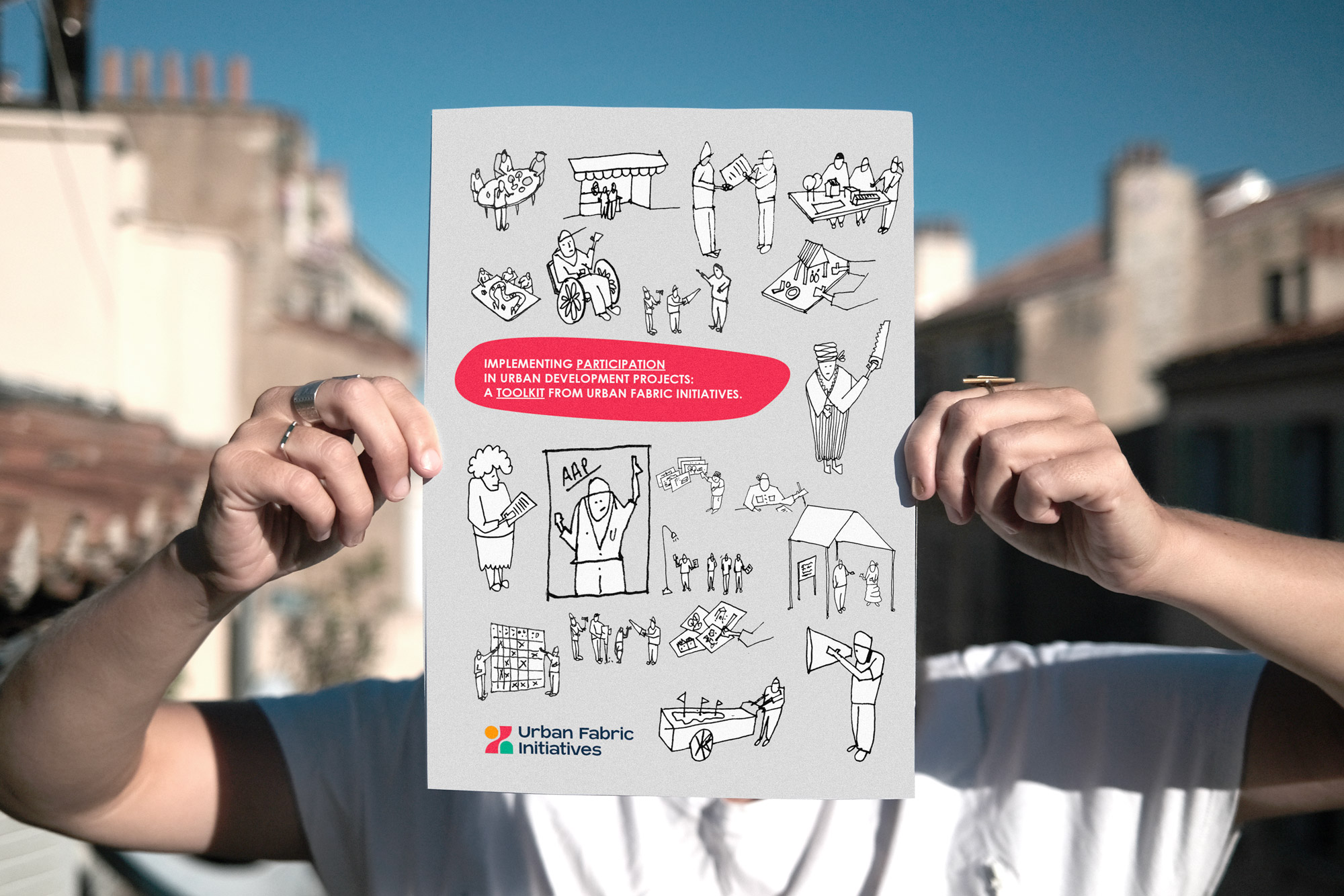
In contexts where large-scale projects radical transform local areas, maintaining the needs and habits of residents and users at the center of the conversation can be challenging. Preliminary technical studies, often conducted under significant time and resource constraints, do not always allow sufficient room for consultation, even though a participatory approach is essential to improving the relevance, inclusivity, and social impact of said projects.
On the African continent, the French Development Agency launched the Urban Fabric Initiatives program in 2018. Backed by major infrastructure projects, the Urban Fabric Initiatives aim to balance rapid implementation with community participation. Their goal: to provide concrete solutions to residents’ needs while testing participatory approaches, particularly in terms of long-term
management.
With support from the Urban Fabric Initiative (UFI) Network, each Urban Fabric Initiative is implemented by a consortium of operators. Implementation is therefore tailored to each specific context while being guided by common methodological principles centered on the participation of local residents and users, carried out in four main stages:
· Assessment, to understand the context before taking action, whether regarding existing uses, expressed needs, or social and spatial dynamics.
· Design, to co-develop the project with residents and users.
· Construction, to build by mobilizing local resources and skills.
· Management, to ensure the sustainability of the developments and structure their governance over time.
While each operator develops its own practices and every project context is unique, the effective involvement of residents and users is a common guiding principal across all Urban Fabric Initiative projects. This toolkit, developed by UFI network members, aims to facilitate and strengthen citizen participation by sharing tools tested in the field by UFI operators. It is therefore intended for future UFI operators as well as any urban planning professionals wishing to draw inspiration from the collaborative approach of the Urban Fabric Initiatives. Its goal is to provide concrete guidelines to support participatory initiatives. Designed as a living resource, this toolkit is intended to be questioned, reinterpreted, adapted to local contexts, enriched and shared.